 Kikase
37 languages · speak from day one
Learn a language by living the story.
Kikase drops you into a scene with a cast who talk back. You speak, they answer, the plot moves. No flashcard treadmill — just conversations you actually want to finish, with corrections that arrive the moment you need them.
Your first hour is free. No card to try it.
What's inside
Everything points at one thing: getting you talking.
Reading and listening are the warm-up. Kikase is built so the largest share of your time is spent practicing the language out loud.
Real conversation, out loud
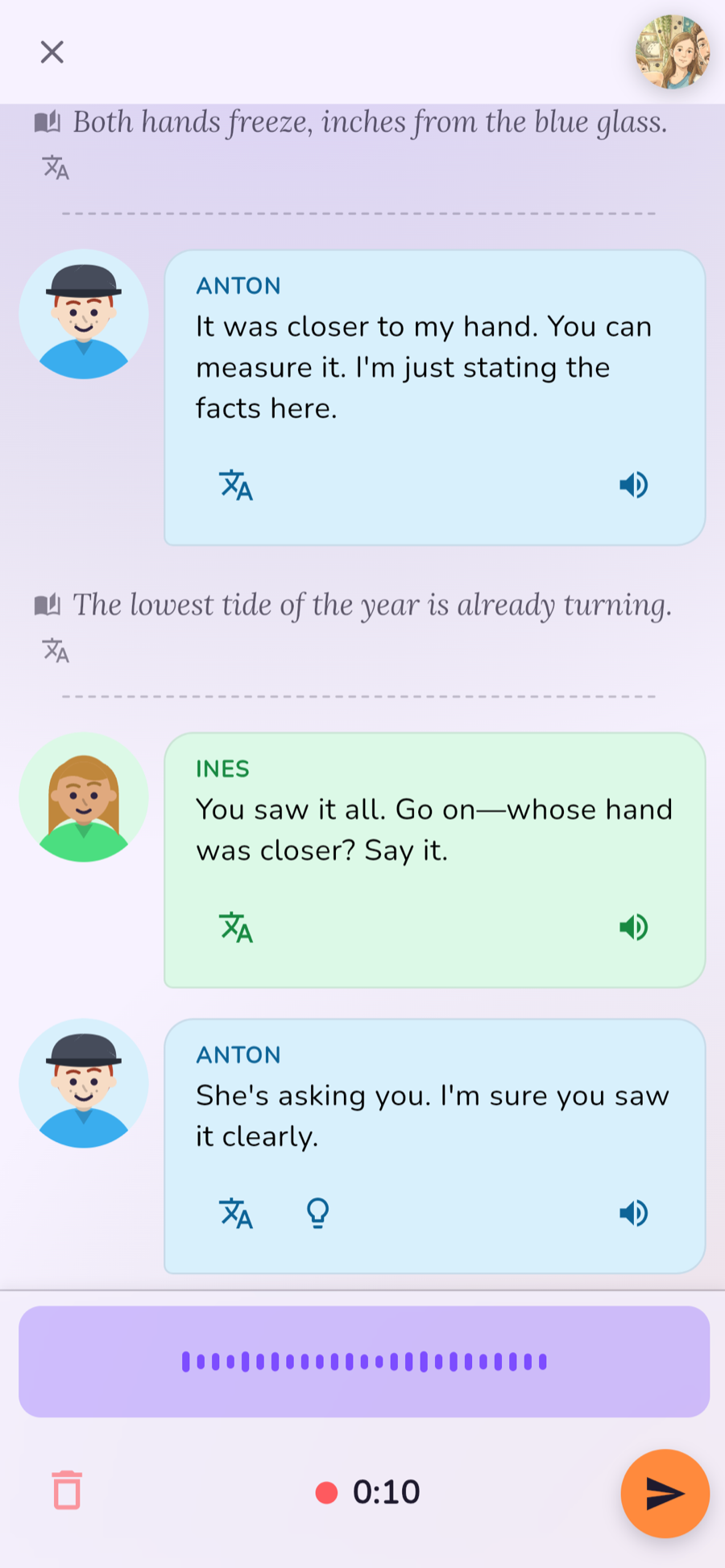
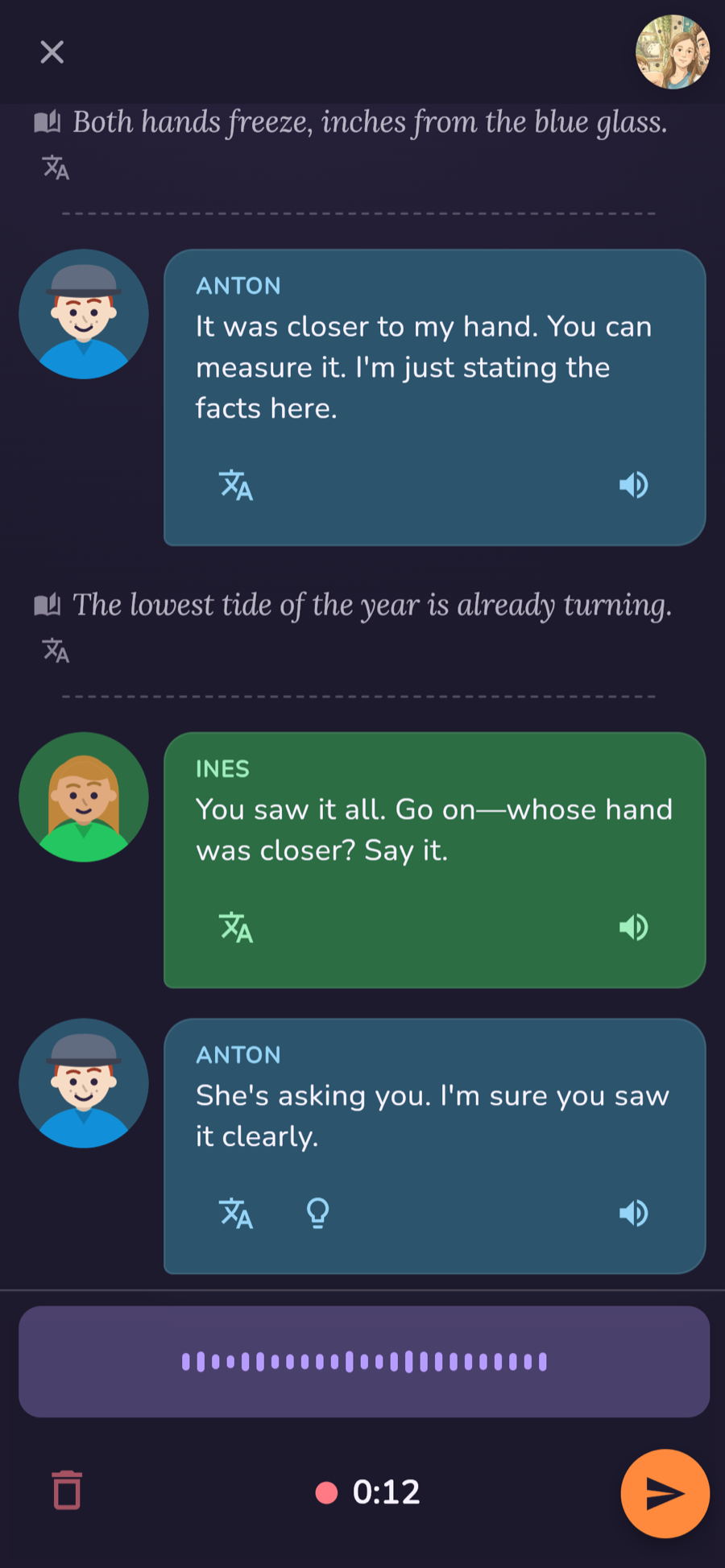
Press the mic and answer in your own words. Kikase listens, replies in character, and quietly logs what tripped you up. Every character gets their own AI voice — cast by role, and directed to act the line rather than announce it.
Written by people
Every story is hand-written and curated by a human, then spoken by AI. The plot doesn't go stale but, the things you say cause reactions that mean something.
The same story, at your level
Each story is rendered to the difficulty you're on, so the plot that works at A1 is the same plot that works at B2 — just harder language.
Progress you can see
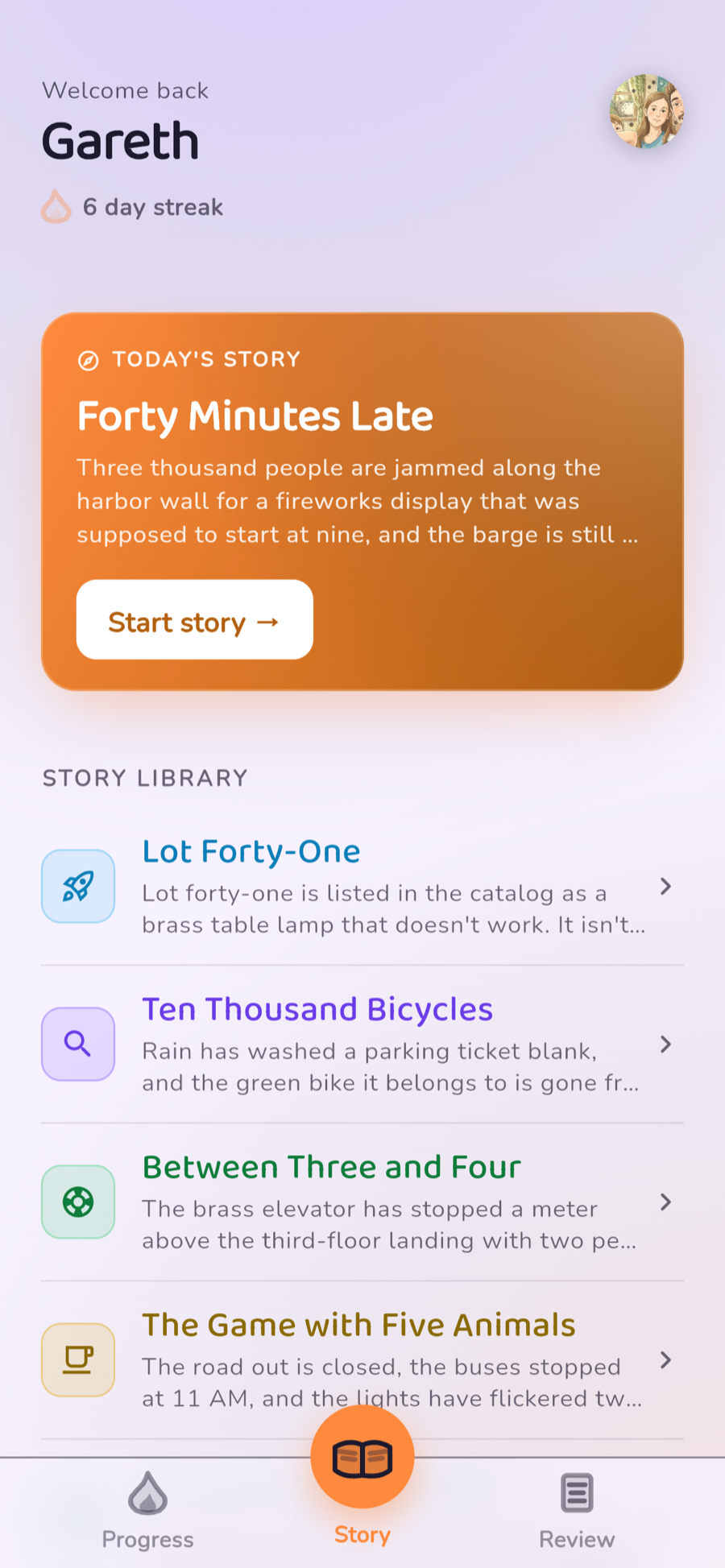
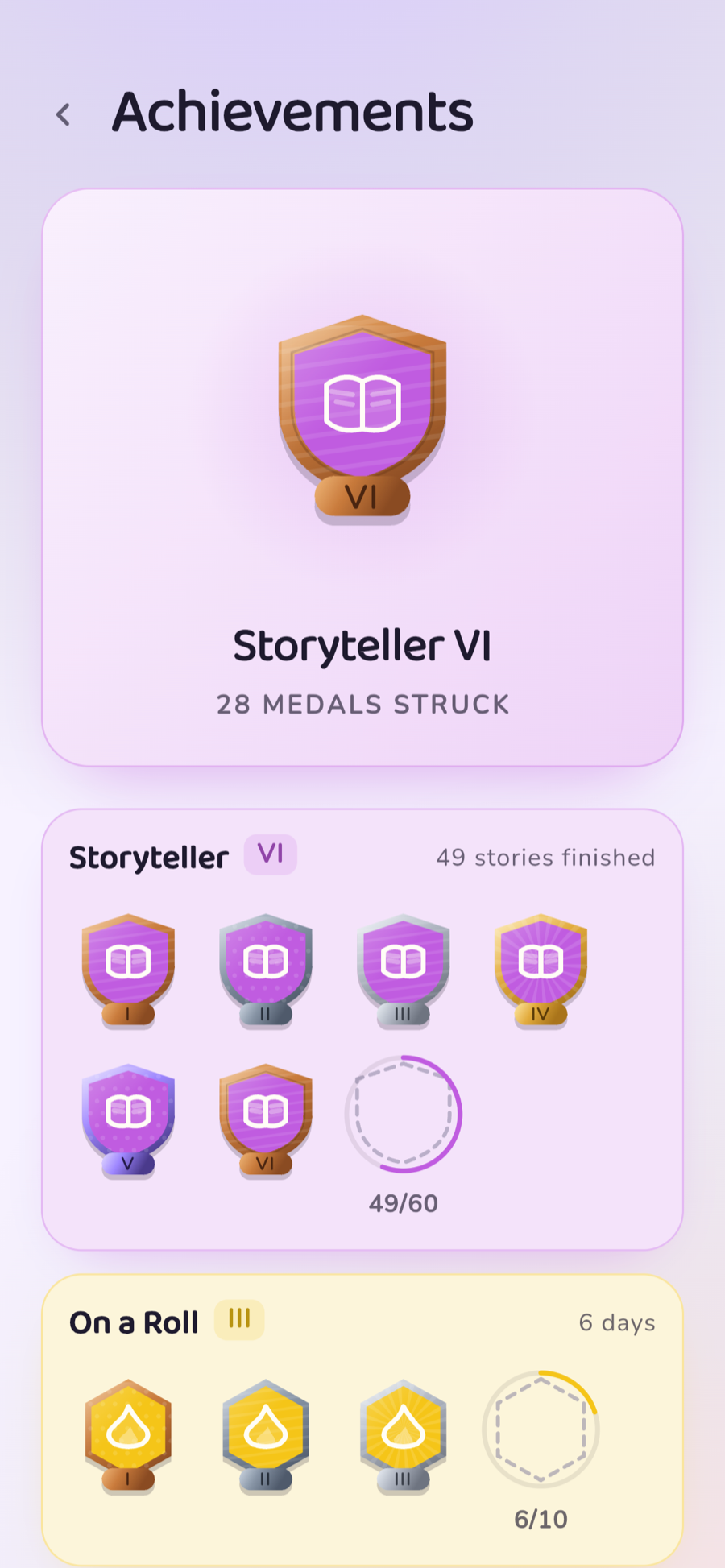
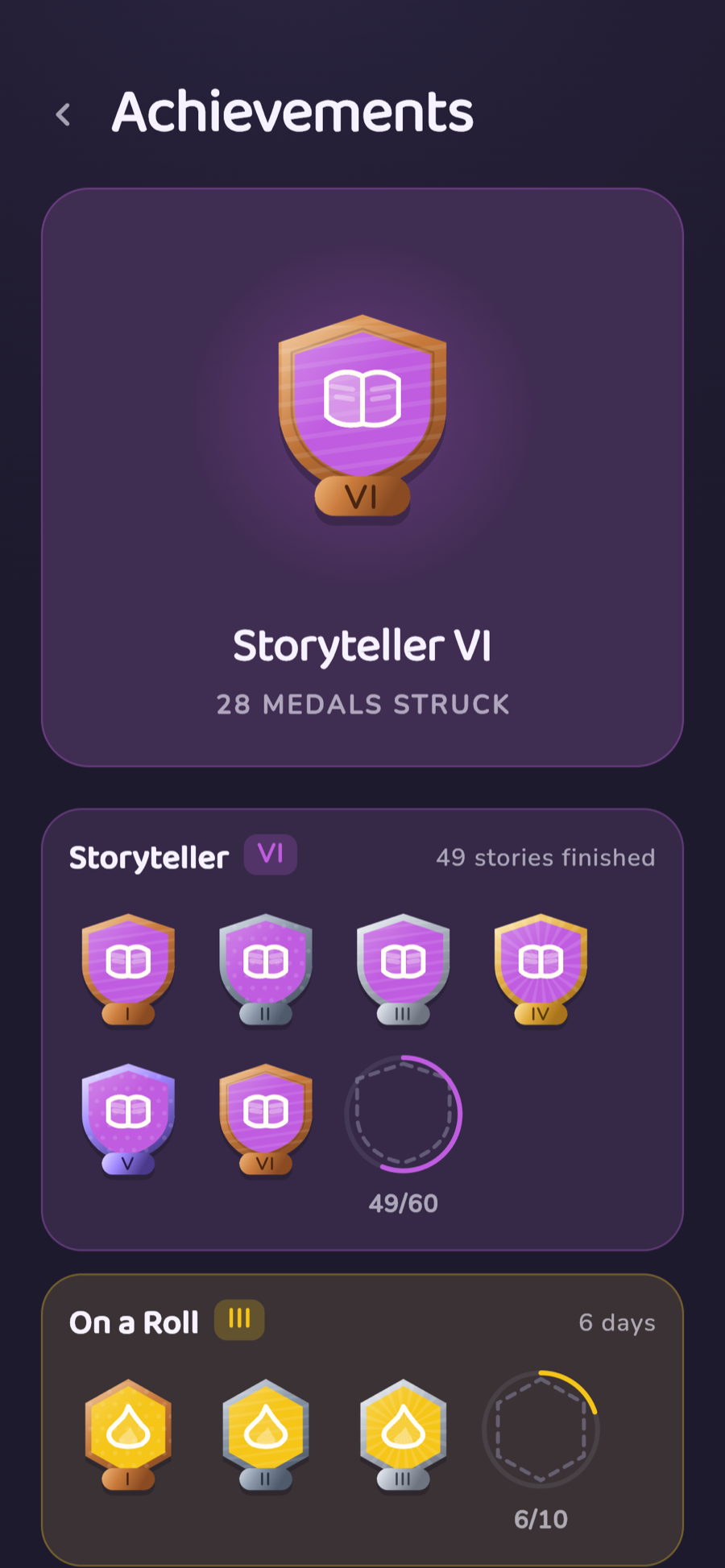
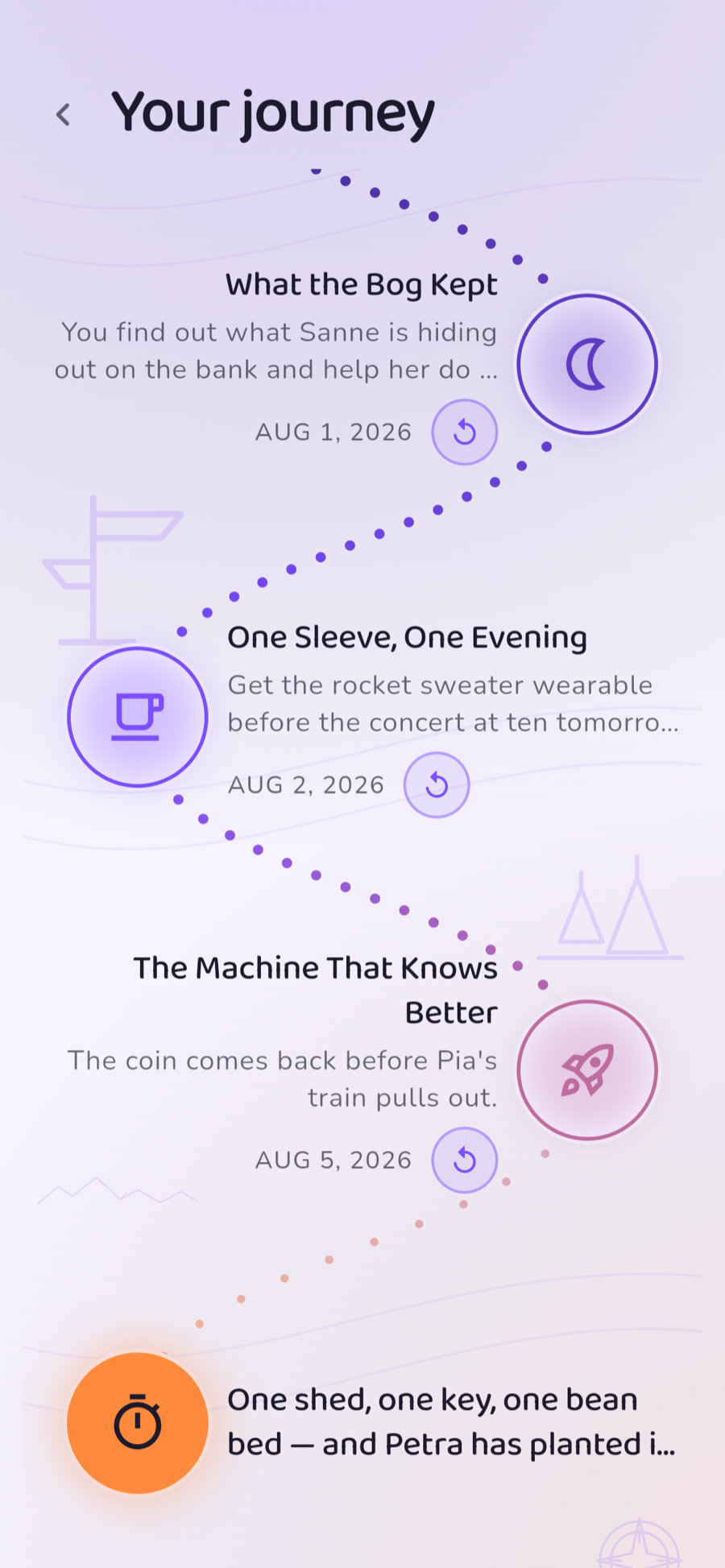
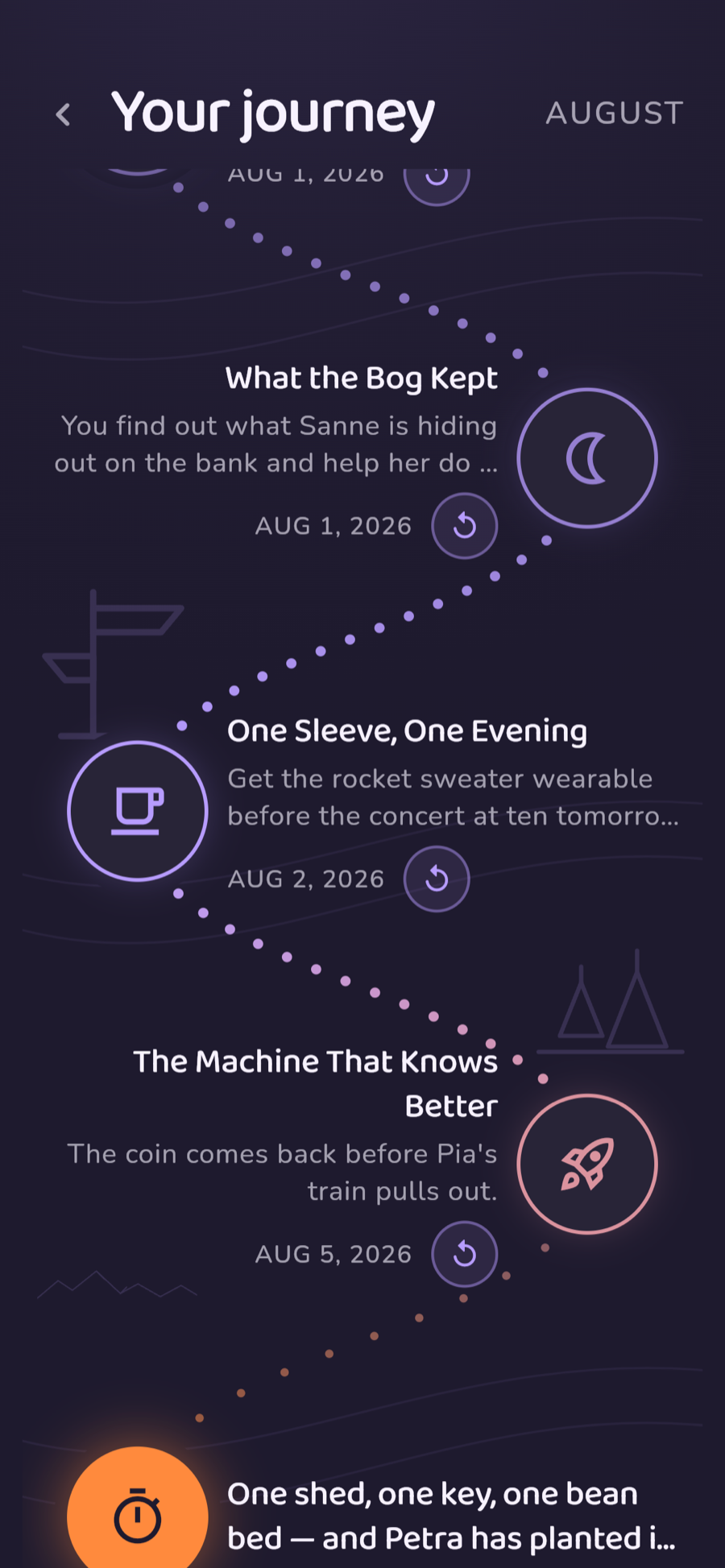
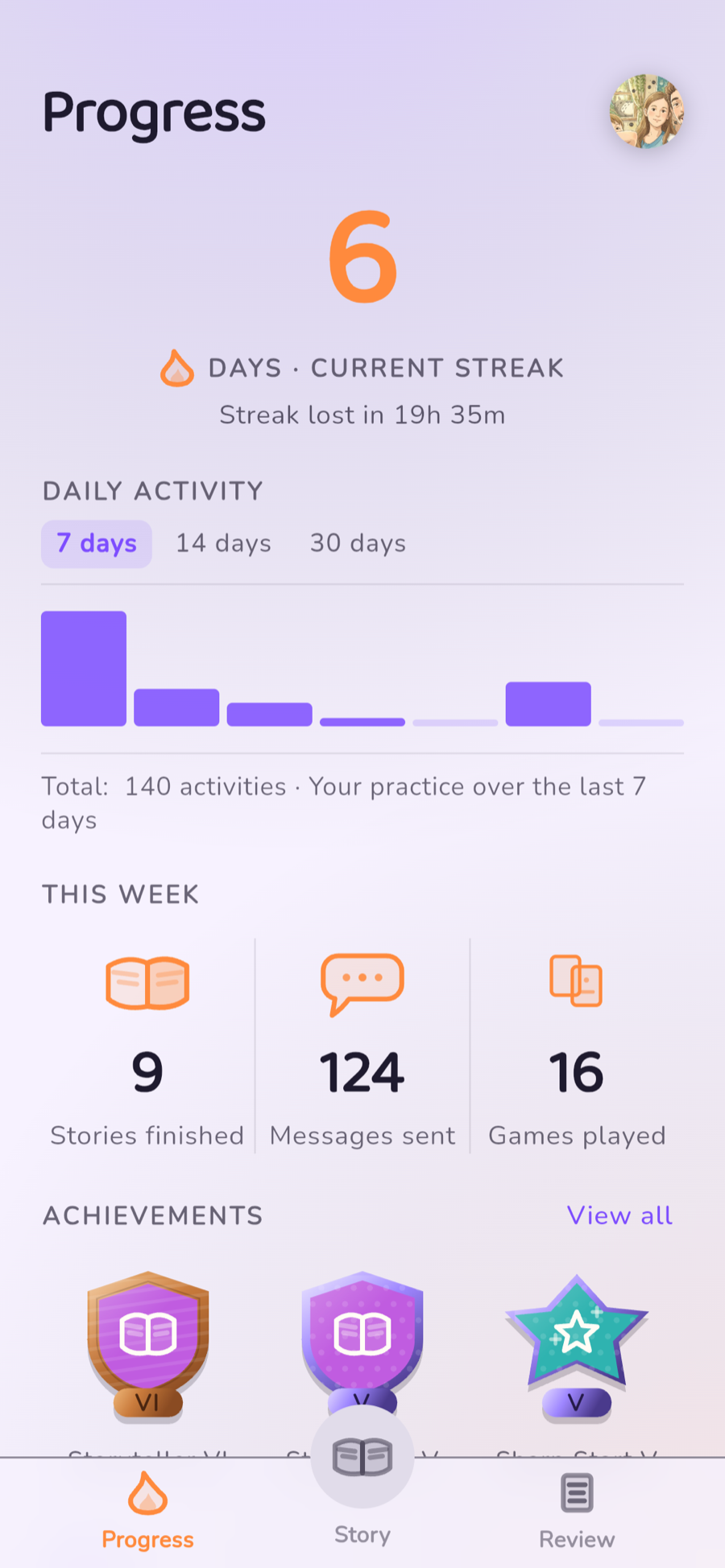
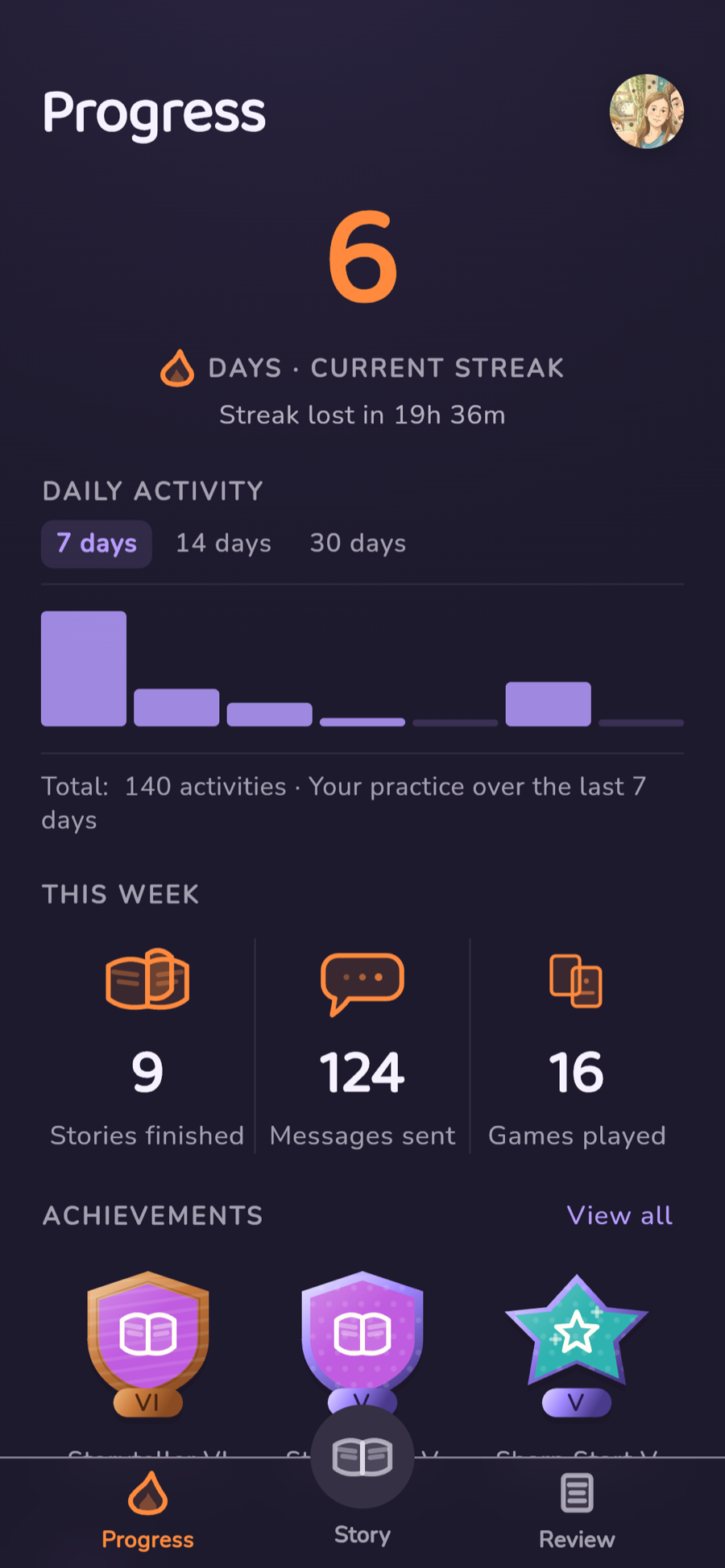
Streaks, a sticker for every story you finish — shinier every time you earn it again — and a record of what you've practised.
The story library
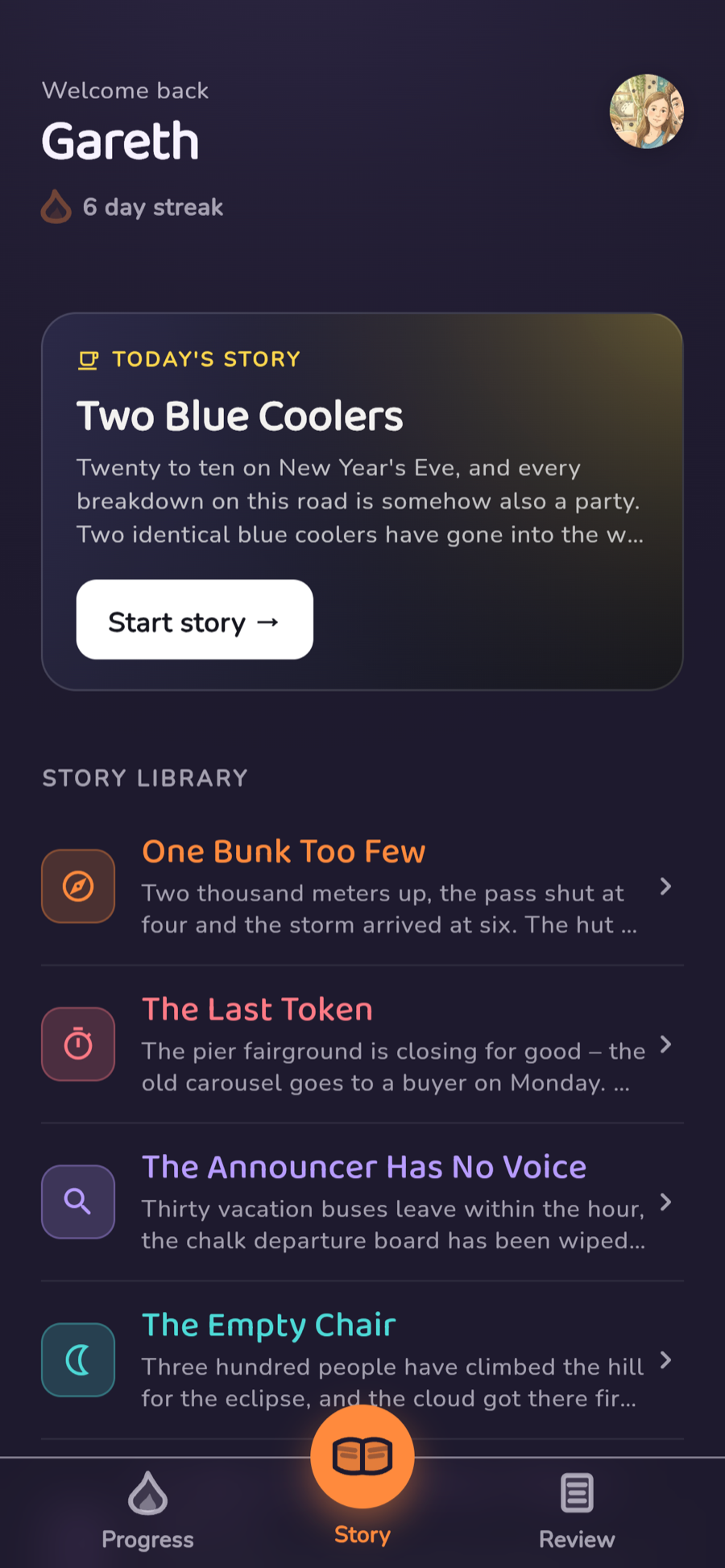
Eight genres, and the app dresses for each one.
A story isn't just text in a different colour. The cast changes what they're wearing, the score changes underneath them, and the sound effects land on the beat they were written for.
The cast dresses for the genre
Characters are drawn for the story they're in — the same name turns up in a detective's coat in one story and a wizard's hat in the next. There's a whole wardrobe behind it, several looks per genre.
A score that follows the scene
Over a hundred and forty music beds, and a story moves between them as it goes — the music under the reveal isn't the music under the chase. Sound effects are cued to the line they belong to.
Not everyone is human
Dragons, crocodiles, octopuses, a talking fridge — forty-seven species are drawn and any of them can join the cast. They get portraits and voices like anybody else.
Review
Practice built from your own mistakes.
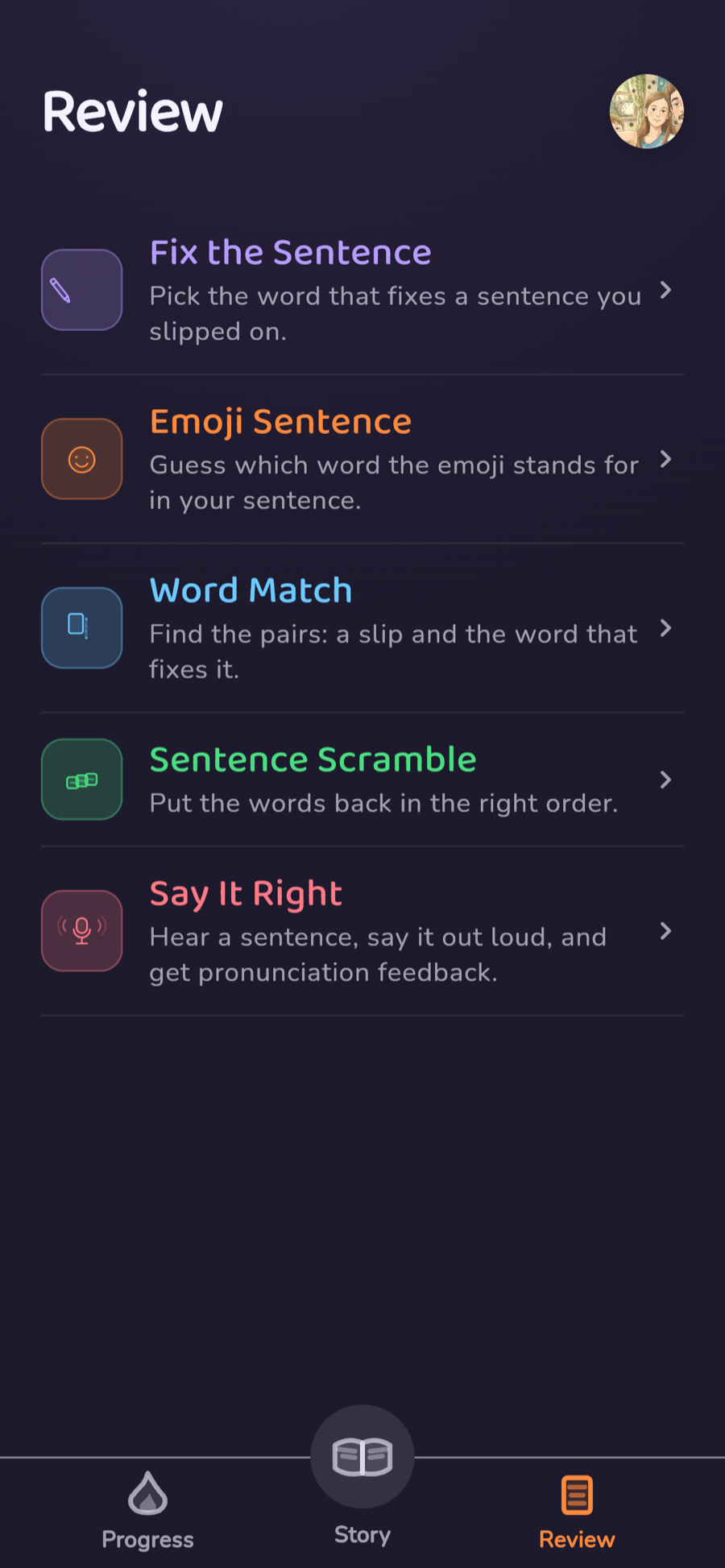
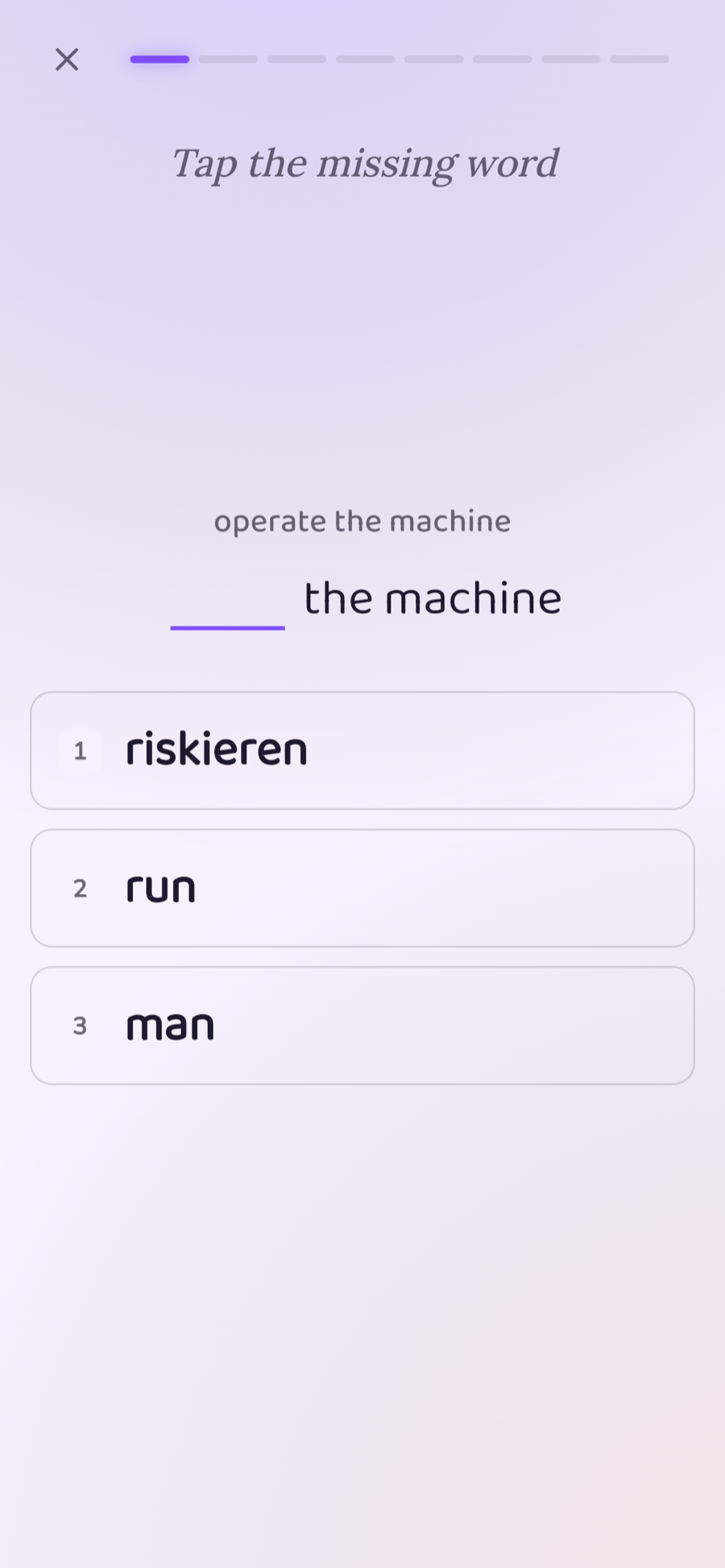
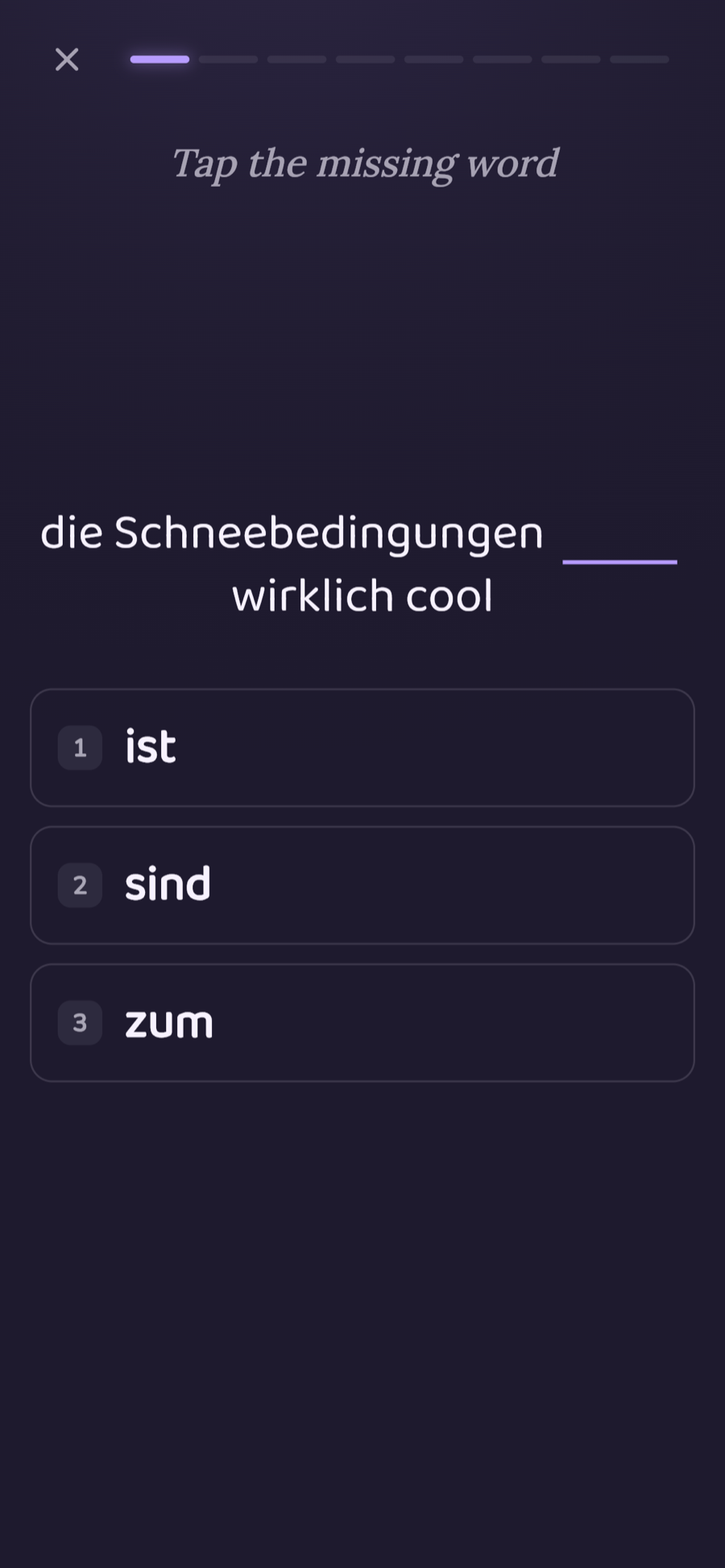
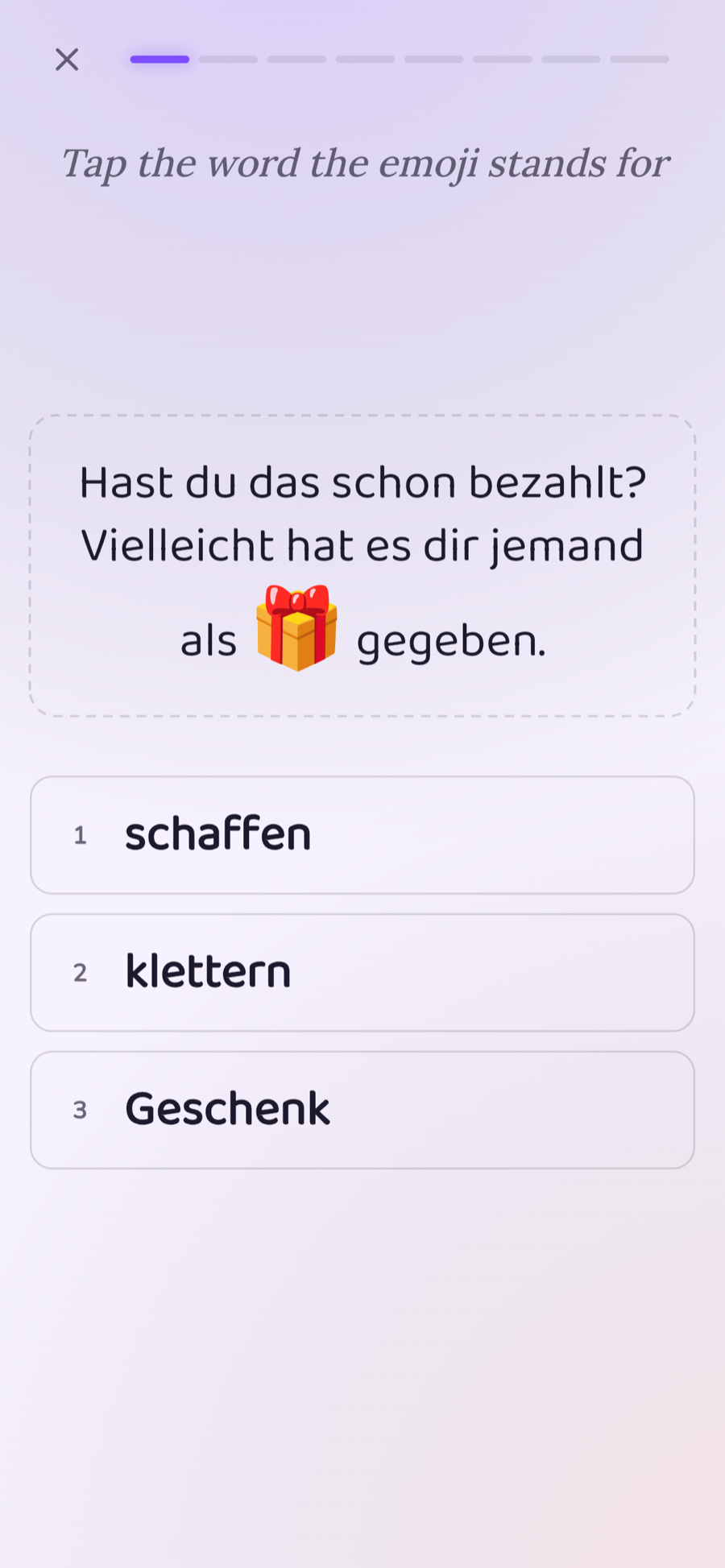
Corrections from conversation become a review deck, scheduled by spaced repetition so they come back exactly when you're about to forget them. Five games work that deck, each for a different way of getting stuck.
- Fix the Sentence — spot what's wrong and repair it
- Emoji Sentence — build a line from a picture prompt
- Word Match — pair words with their meanings
- Sentence Scramble — rebuild a sentence word by word
- Say It Right — say it until the sound lands
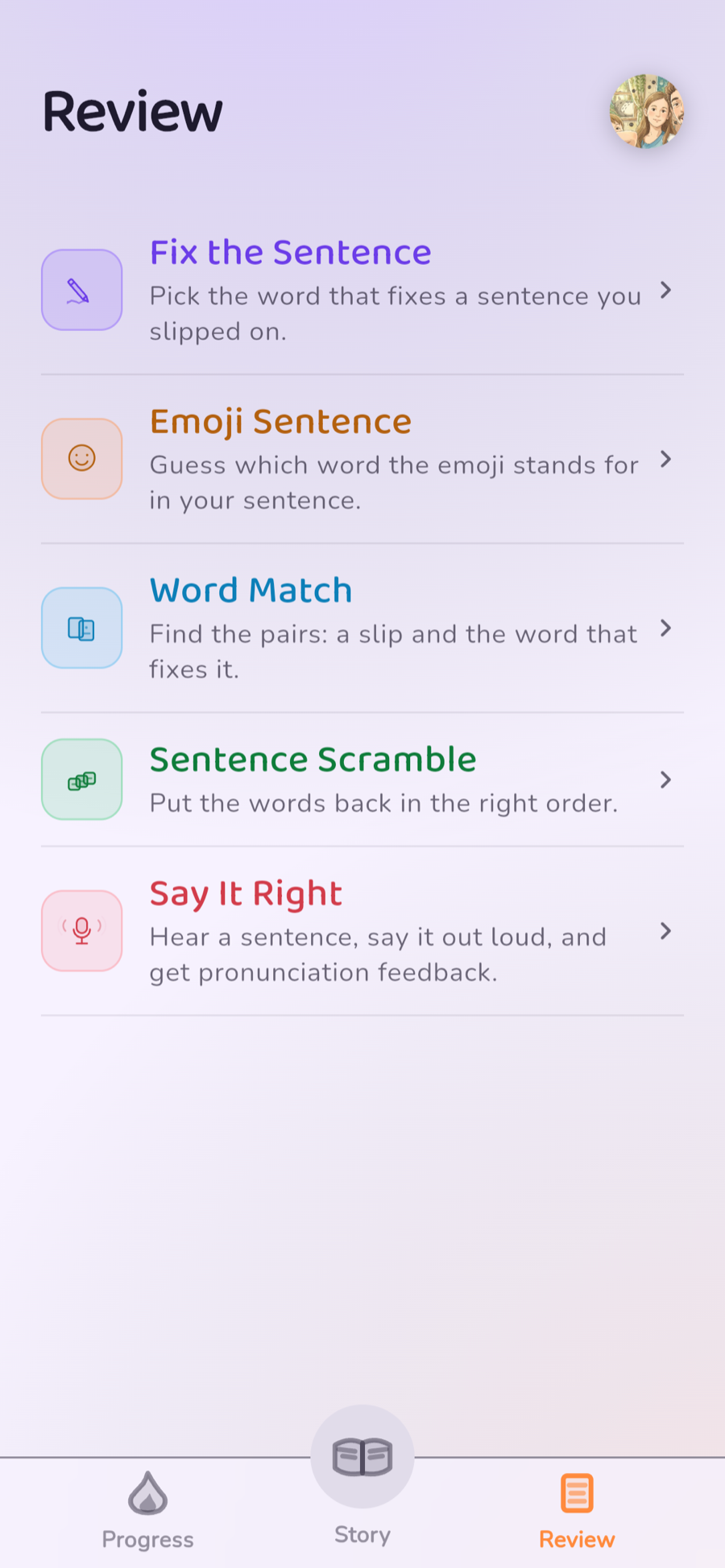
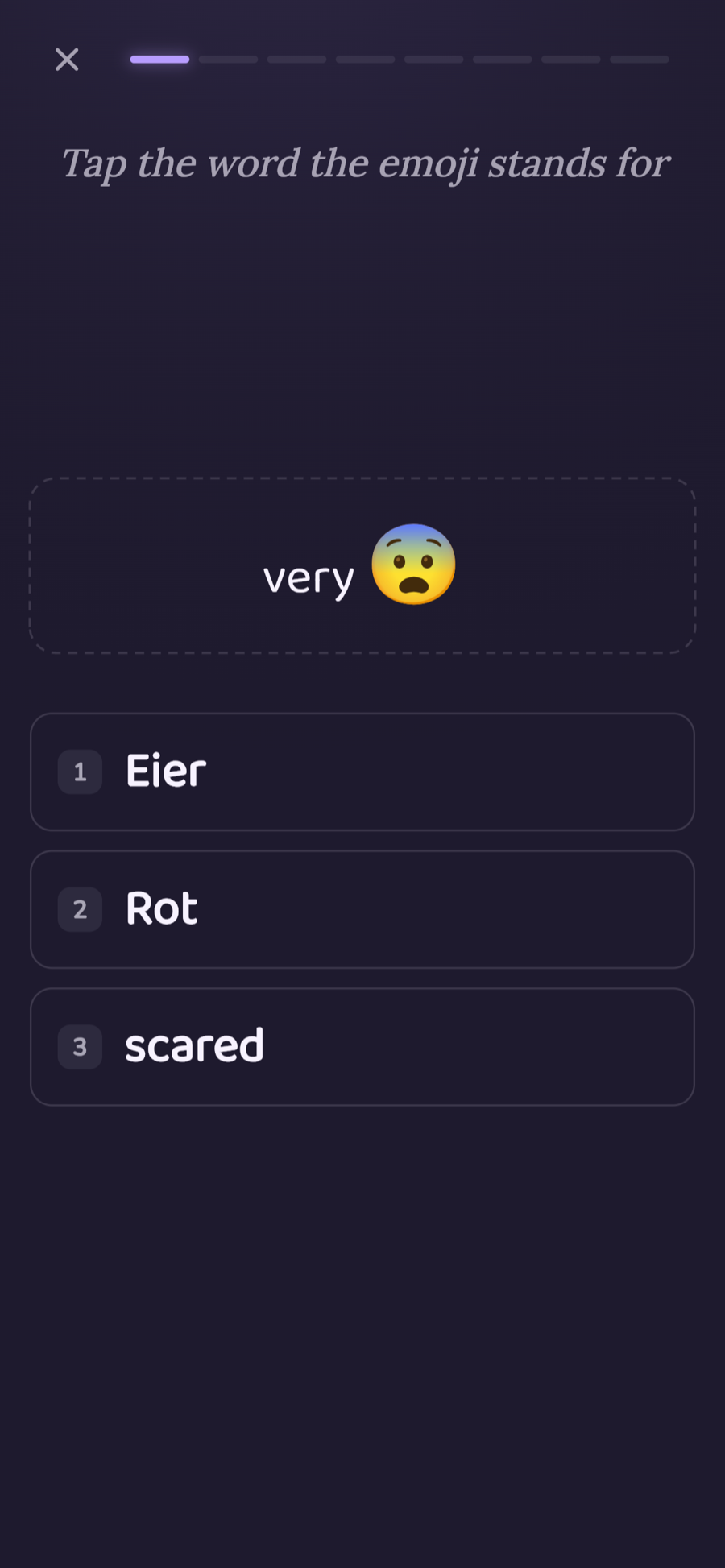
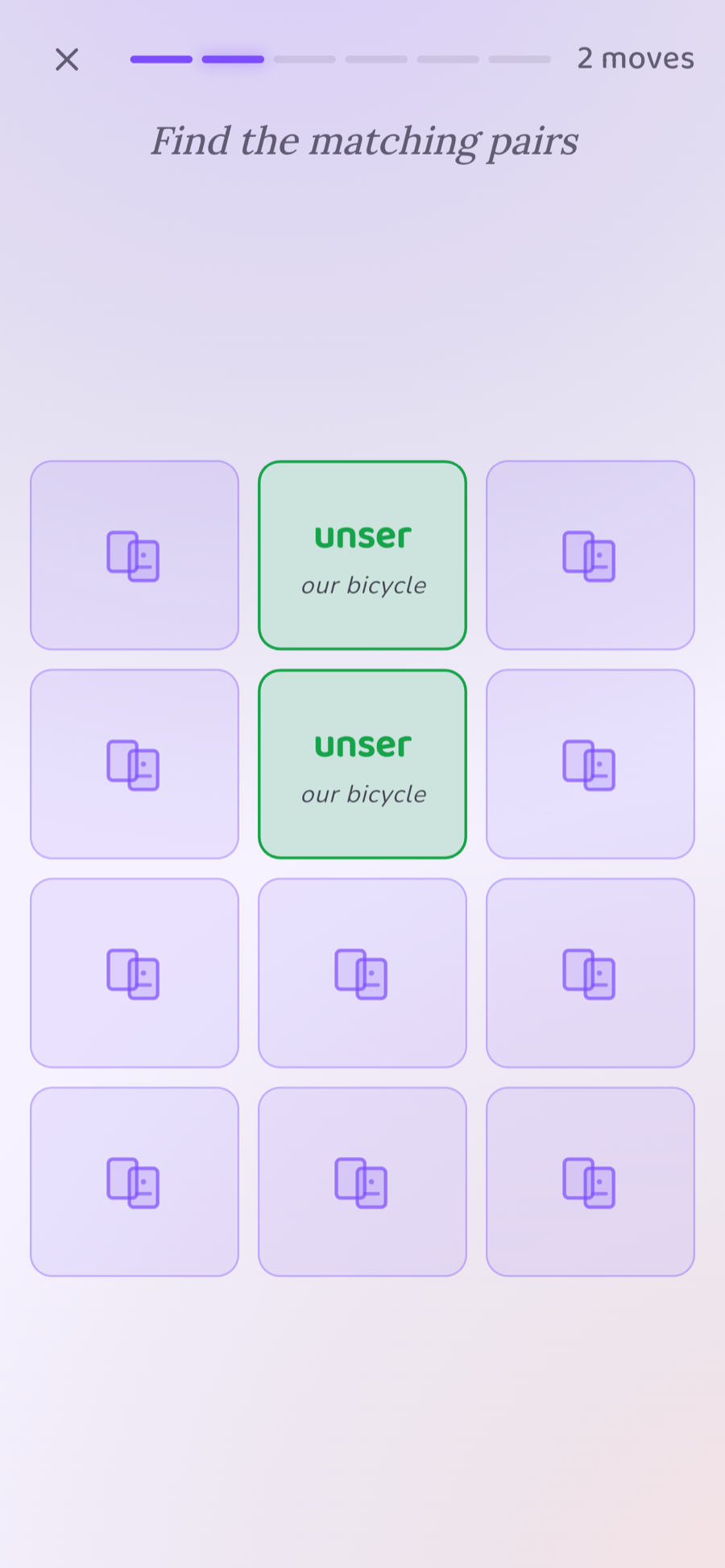
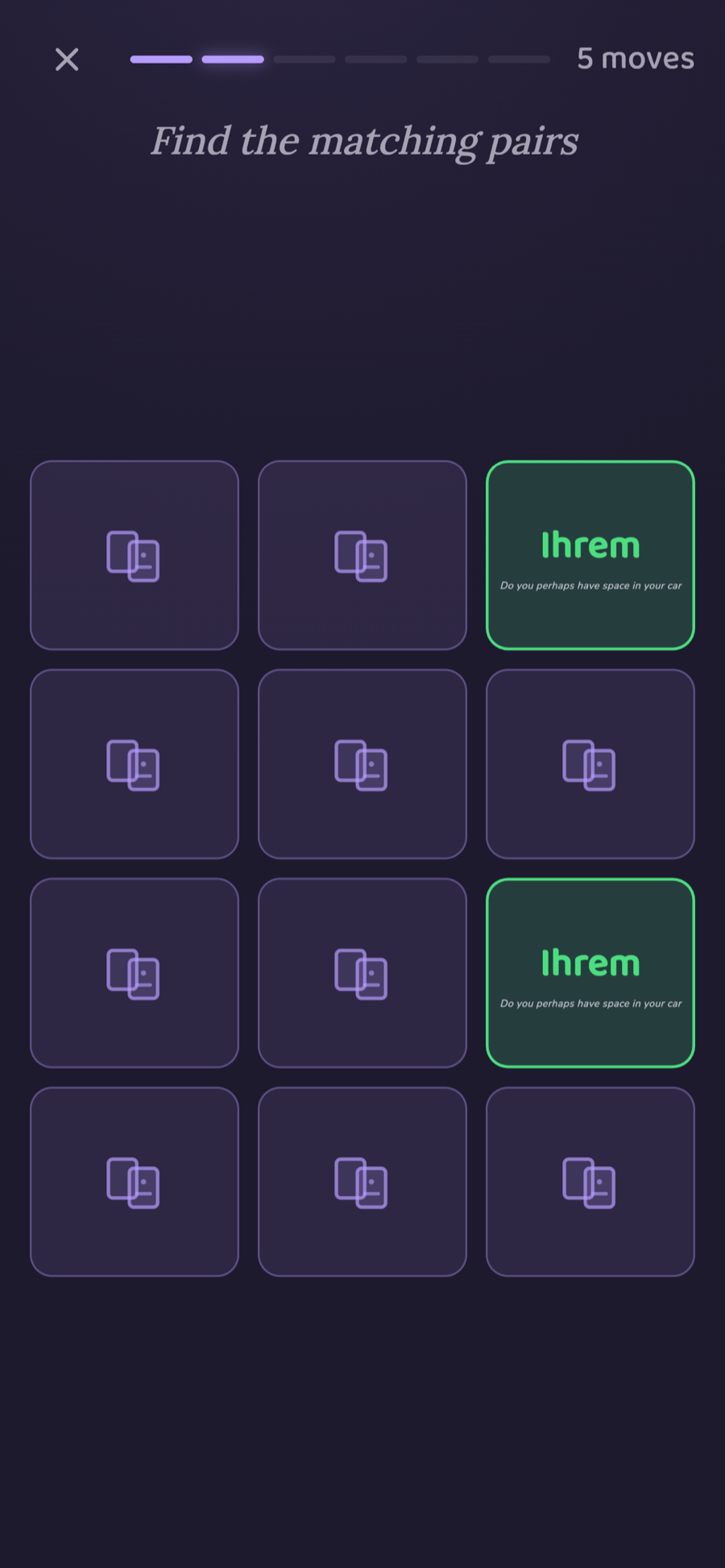
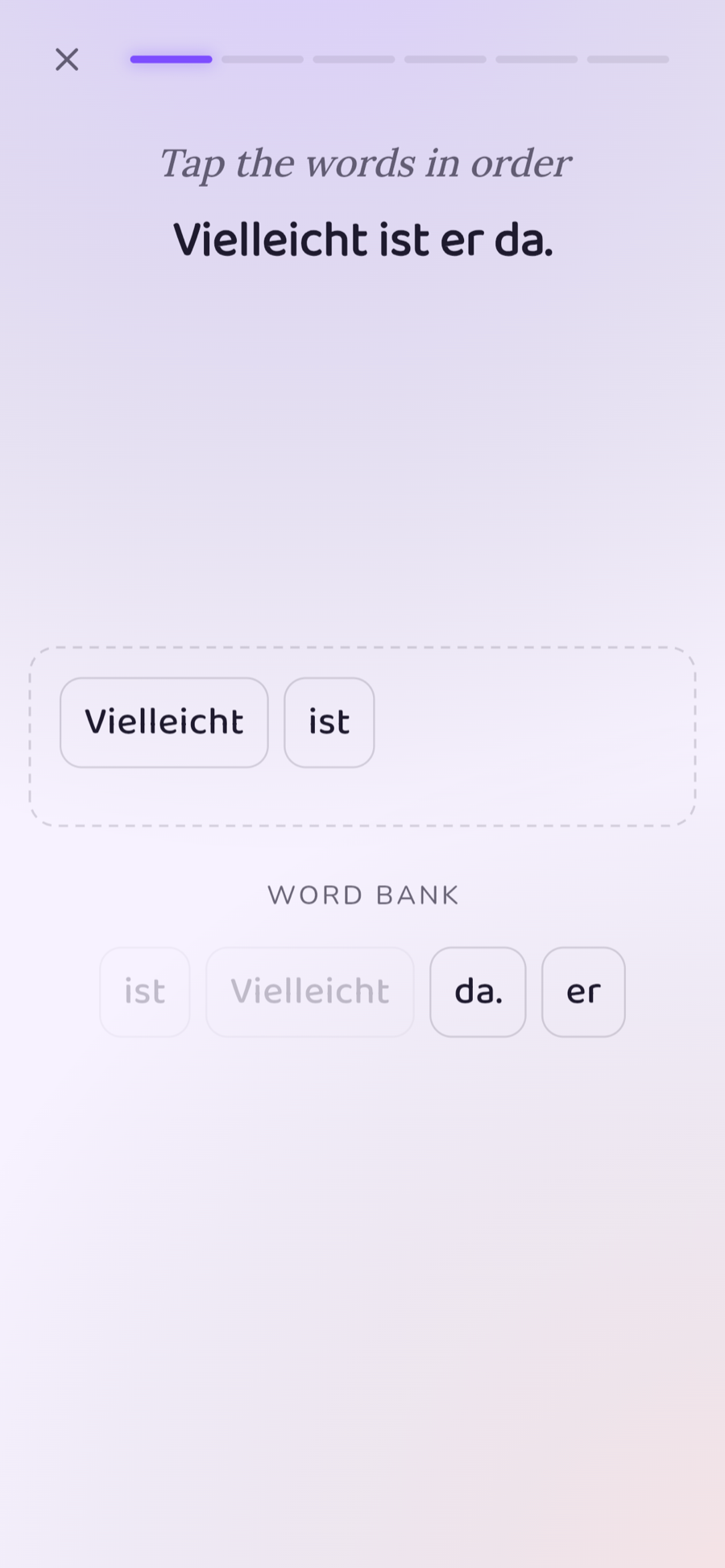
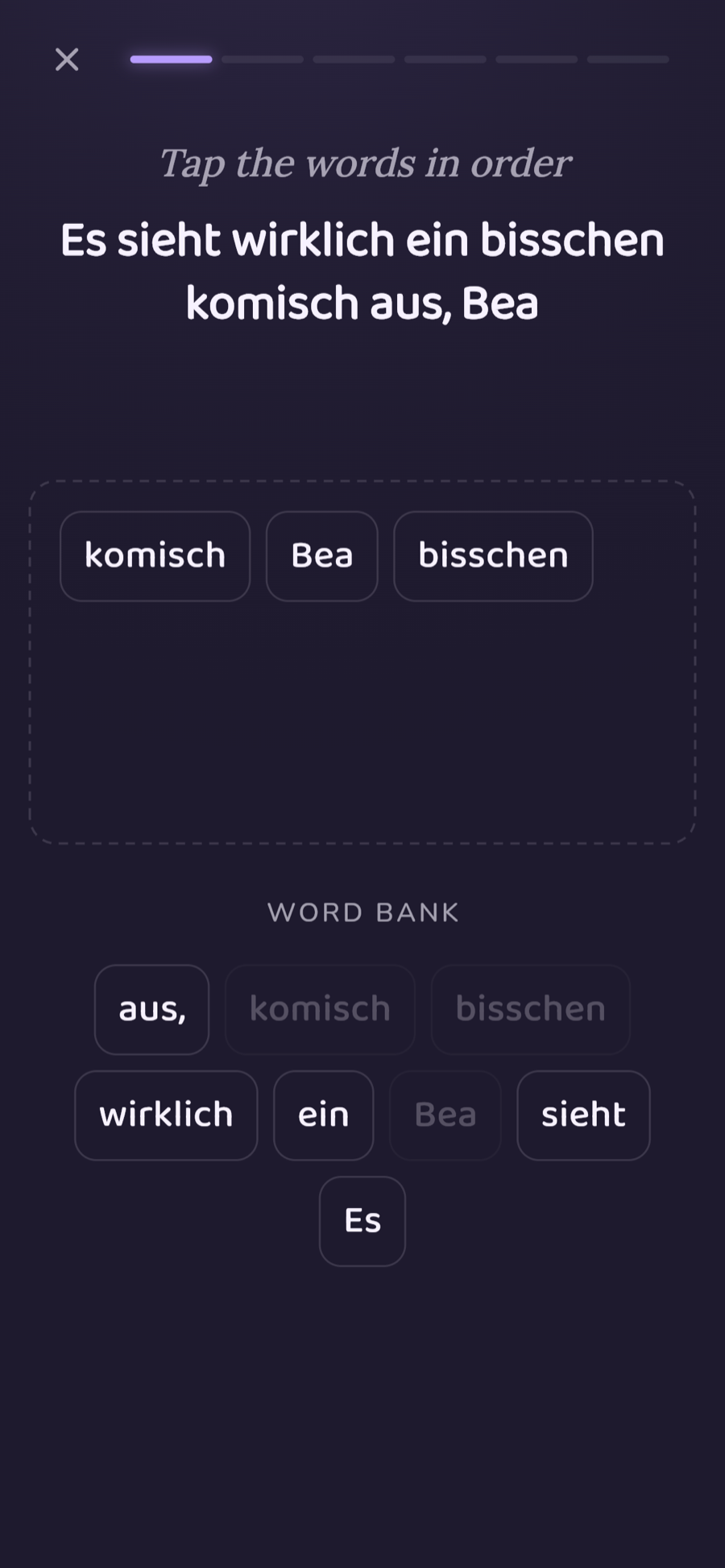
A fifth game, Say It Right, scores pronunciation out loud — screenshot still to come.
Languages
37 to learn — and the app speaks your own back to you.
Kikase's interface follows your native language, not your phone's. If you think in Polish, the menus are in Polish while the story stays in Japanese.
- Spanish
- French
- German
- Italian
- Portuguese
- Dutch
- Polish
- Czech
- Slovak
- Hungarian
- Romanian
- Greek
- Danish
- Swedish
- Norwegian
- Finnish
- Russian
- Ukrainian
- Turkish
- Arabic
- Hebrew
- Hindi
- Bengali
- Urdu
- Punjabi
- Gujarati
- Marathi
- Tamil
- Kannada
- Malayalam
- Chinese
- Japanese
- Korean
- Thai
- Vietnamese
- Indonesian
- English
Questions
The things people ask first.
Do I need to talk out loud to use it?
Yes. Kikase is a speaking app — you answer with your voice, not a keyboard. That's the whole point of it, and it's why you'll want somewhere you don't mind being heard.
Is it free?
Your first hour is free, and you don't need to give a card to use it. After that a subscription keeps the stories and conversation going. You can cancel from your App Store or Google Play account at any time.
Who writes the stories?
People do. Every story is hand-written and curated by a human before it ships, then rendered into your language at your level and performed by AI voices. It isn't a model improvising a plot at you.
How old do I need to be?
Kikase is for people aged 16 and over. See our children's privacy section.
How is this different from a flashcard app?
Flashcards test recognition. Kikase makes you produce the language in a situation that has a point to it, then turns your actual mistakes into the review deck. The games exist to reinforce what you got wrong in conversation, not to replace it.
Does my recording get stored?
Your speech is sent for transcription so the app can respond and score pronunciation. What we keep and for how long is set out in the privacy policy.
Which devices does it run on?
iPhone, Android and the web. Your progress is on your account, so you can start a story on a phone and pick it up in a browser.
Your first conversation is about four minutes away.
Pick a language, pick a story, and start talking. The first hour is free.